
How to Choose a Solar Battery Backup in 2026?
Choosing a solar battery backup in 2026 requires more than comparing storage capacity and prices. A reliable system must match your home, solar array, electricity plan, and daily energy habits. A 10 kWh battery may sound substantial, yet it could power only essential appliances overnight. A refrigerator, router, lights, and medical equipment can draw a surprising amount of energy during an outage.
Start with your real consumption data. Review utility bills, inverter reports, and smart-meter readings from different seasons. Identify which circuits must remain active, such as refrigeration, heating controls, internet equipment, or a sump pump. Then examine usable capacity, continuous output, surge performance, round-trip efficiency, warranty terms, and expected cycle life. These specifications affect daily performance more than the headline battery size. Installation quality matters too. A certified installer should assess the main panel, transfer equipment, ventilation, site conditions, and local requirements before recommending a model.
Technology changes quickly. Newer batteries may offer improved software, safer chemistry, or stronger backup integration, but newer does not always mean better for every household. Some systems are expensive to repair. Others depend heavily on proprietary apps or installer support. I would also question optimistic payback estimates, especially when tariffs, weather, and battery degradation are uncertain. The right solar battery backup should provide practical resilience without stretching your budget beyond reason. This guide will compare key specifications, realistic backup scenarios, safety considerations, and ownership costs, helping you make a decision based on evidence rather than marketing promises. Even careful planning has limits. Expect to revisit your assumptions.
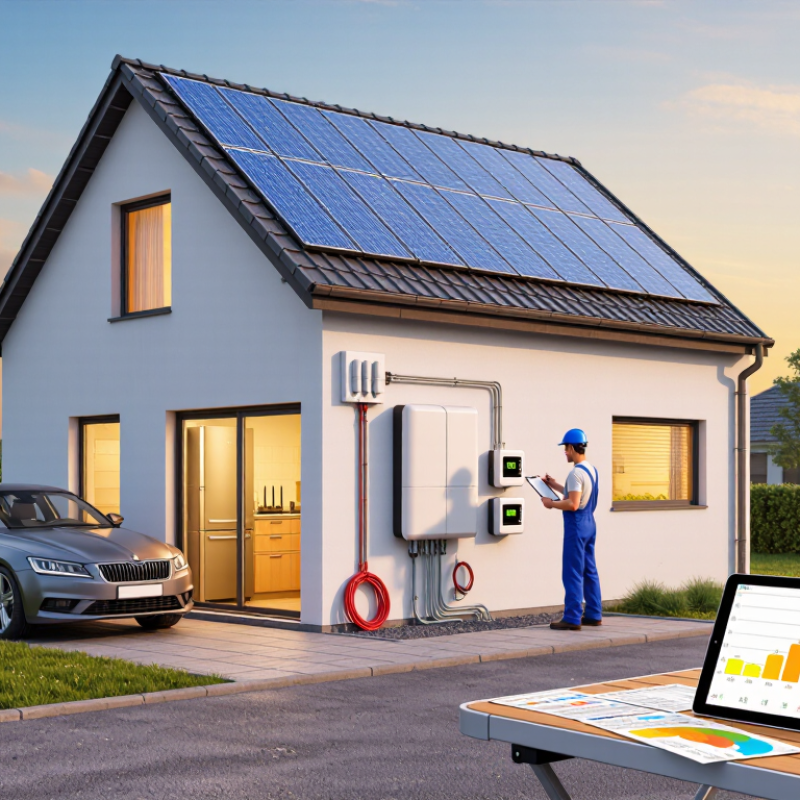
Solar Battery Backup Basics and Key System Components
How to Choose a Solar Battery Backup in 2026?
A solar battery backup stores daytime solar energy for evening use or power outages. Its core parts include the battery pack, inverter, charge controller, transfer switch, monitoring system, and protective wiring. Each part affects safety, performance, and cost. A battery with high capacity may still disappoint if its inverter cannot run essential appliances. Check usable capacity, not only the advertised size. Depth of discharge and round-trip efficiency also matter.
Start with your actual loads. A refrigerator may need a short surge when its compressor starts. Lights, internet equipment, medical devices, and a small pump require different power levels. List their wattage and expected running hours. Then compare continuous power and surge power ratings. Lithium iron phosphate batteries often provide stable cycle performance, but temperature limits and installation conditions still need attention. Place the system in a dry, ventilated area, away from heat and flooding.
The monitoring system should show battery percentage, solar input, output power, and fault warnings. A certified installer can verify grounding, isolation, cable sizing, and local electrical requirements. Do not overlook maintenance access. It sounds minor. It is not. A practical estimate may be wrong when winter sunlight falls or household demand changes. Leave some capacity margin, and review the system after several months. The most expensive choice is often an oversized system that rarely cycles.
How to Choose a Solar Battery Backup in 2026? - Solar Battery Backup Basics and Key System Components
| Category | Key Specification | Typical Planning Range or Fact | Why It Matters | Selection Guidance |
|---|---|---|---|---|
| Battery Chemistry | Lithium iron phosphate (LFP) | Usually supports a high usable depth of discharge, commonly around 80–95%, with typical cycle-life planning ranges of approximately 3,000–7,000 cycles depending on operating conditions. | Provides good usable capacity, thermal stability, and long service potential for frequent cycling. | A strong general-purpose choice for daily solar shifting and household backup when the battery management system is properly matched. |
| Battery Chemistry | Lead-acid, including AGM and flooded types | Often planned around approximately 50% usable depth of discharge; cycle life can range from several hundred to more than 1,000 cycles depending on type, temperature, and discharge depth. | Lower usable capacity and shorter cycle life can increase the required nominal battery size. | Consider only where lower upfront cost, ventilation requirements, weight, and maintenance are acceptable. |
| Nominal Energy Capacity | Battery capacity in kilowatt-hours (kWh) | Small critical-load systems may use about 5–10 kWh; larger homes commonly require 10–30 kWh or more, depending on loads and outage duration. | Determines how much energy can be stored before conversion losses and reserve limits. | Size from measured daily energy use, not from the home’s total connected load alone. |
| Usable Energy | Nominal capacity × allowable depth of discharge | Example: a 10 kWh battery operated to 90% depth of discharge provides approximately 9 kWh before inverter and wiring losses. | Usable energy is more meaningful than the nameplate capacity when estimating runtime. | Compare systems using usable kWh at the stated operating conditions. |
| Backup Duration | Required hours or days of autonomy | Essential-load backup may target 8–24 hours; multi-day resilience requires additional capacity, load reduction, or solar recharging during the outage. | Longer outages require more energy storage and do not depend on battery size alone. | Define essential loads first and include conservative assumptions for low-solar weather. |
| Continuous Power | Inverter output in kilowatts (kW) | Many residential backup systems fall in the approximate range of 3–10 kW continuous output, but requirements vary significantly by load type. | Controls how many appliances can operate simultaneously. | Add the running wattage of loads expected to operate at the same time. |
| Surge Power | Short-duration starting power | Motors, pumps, refrigerators, compressors, and some power tools can require several times their running power during startup. | Insufficient surge capability can cause nuisance shutdowns even when average demand is within the inverter rating. | Check appliance startup requirements and the inverter’s surge duration, not just its peak wattage. |
| Round-Trip Efficiency | Energy recovered after charging and discharging | Complete battery-system round-trip efficiency is commonly approximately 80–95%, depending on battery chemistry, inverter, temperature, load level, and system design. | Higher efficiency reduces solar energy lost during storage. | Compare tested system-level efficiency under similar conditions rather than cell efficiency alone. |
| Battery Voltage | System DC voltage | 12 V and 24 V systems are common for smaller applications; 48 V systems are widely used for larger residential storage because higher voltage reduces current for the same power. | Voltage affects cable size, current, protection devices, inverter compatibility, and installation losses. | Use only components designed for the same voltage architecture and follow electrical-code requirements. |
| Solar Charge Controller | MPPT or PWM controller | MPPT controllers generally extract more energy than PWM controllers when solar-array voltage is substantially higher than battery voltage or when conditions vary. | The controller regulates charging and protects the battery from overcharging. | Match maximum PV voltage, charging current, battery chemistry, and temperature compensation requirements. |
| Battery Inverter | DC-to-AC conversion and grid interaction | A hybrid inverter can manage solar generation, battery charging, household loads, and grid connection in one coordinated system. | The inverter determines AC power, waveform quality, efficiency, monitoring, and operating modes. | Confirm output voltage, phase configuration, continuous and surge ratings, and compatibility with the battery management system. |
| Automatic Transfer Equipment | Backup isolation and changeover | Transfer time varies by system design; sensitive electronics may require an uninterruptible power supply or a specifically rated backup output. | The equipment safely disconnects backed-up circuits from the grid during an outage. | Use qualified installation and verify whether whole-home or selected-circuit backup is supported. |
| Battery Management System | Cell monitoring, balancing, and protection | A properly configured BMS monitors cell voltage, current, and temperature and can disconnect the battery during unsafe conditions. | The BMS supports safe operation, performance monitoring, and battery longevity. | Confirm communication compatibility between the BMS, inverter, charger, and monitoring platform. |
| Temperature and Installation | Location, ventilation, and environmental conditions | Battery performance and charging limits change with temperature. Most systems require protection from water, excessive heat, freezing conditions, and direct sunlight. | Temperature affects available capacity, charging safety, service life, and enclosure requirements. | Follow the equipment’s installation temperature range, clearance rules, ventilation requirements, and local fire-safety regulations. |
| Backup Load Planning | Essential versus non-essential circuits | Typical essential loads may include refrigeration, lighting, communications, internet equipment, medical equipment, and selected outlets. | Separating high-demand loads can reduce battery size and improve outage runtime. | Use a dedicated critical-load panel or a controllable load-management strategy where appropriate. |
| Sizing Formula | Required nominal battery capacity | Approximate formula: Required nominal kWh = load energy required ÷ usable depth of discharge ÷ round-trip efficiency. | This accounts for capacity limits and conversion losses. | Add a design margin for temperature, battery aging, unexpected loads, and low-solar periods. |
| Safety and Compliance | Electrical, fire, and installation standards | Requirements vary by country, region, building type, and system voltage. Permits, disconnects, overcurrent protection, grounding, and inspection may be required. | Correct installation reduces electrical, fire, property, and personnel risks. | Use qualified professionals and verify current local codes before purchasing or installing a system. |
Related Posts
-
10 Best Solar Energy Storage Batteries for Global Buyers?
-
Top 5 Best Solar Battery Storage Systems to Maximize Your Energy Savings?
-

10 Best Solar Energy Storage Batteries to Buy in 2026?
-
Why Choose a Battery Energy Storage System?
-
Top 10 Li Ion Battery Suppliers for Global Buyers?
-

Best Battery Solutions for Global Procurement Needs?