Why Choose a Battery Energy Storage System?
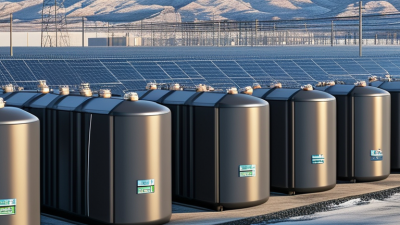
A battery energy storage system is becoming essential for a more flexible electricity network. It stores electricity when solar panels produce excess power. It releases that energy during evening demand peaks. This simple cycle can reduce grid pressure and improve renewable energy use.
The International Energy Agency reported in Batteries and Secure Energy Transitions (2024) that global battery storage capacity must increase sixfold by 2030. The target reaches about 1,200 GW under its Net Zero Emissions Scenario. The IEA also identifies battery storage as the fastest-growing clean energy technology in the power sector. IEA Executive Director Fatih Birol stated, “Battery storage is the fastest-growing clean energy technology in the power sector today.” Lazard’s Levelized Cost of Storage analysis also shows that lithium-ion systems can support several applications, including peak shifting, frequency regulation, and renewable integration.
The value is practical. A containerized system can charge at noon and discharge around 7 p.m. It can also respond within milliseconds to sudden grid changes. However, the business case is not automatic. Battery degradation, fire protection, recycling, connection delays, and volatile electricity prices still require careful planning. NREL research emphasizes that storage value depends strongly on location, operating strategy, and grid conditions. That detail matters. A technically impressive project may underperform if it uses the wrong control strategy. Choosing a battery energy storage system therefore means comparing safety, lifecycle cost, warranty terms, software capability, and revenue opportunities—not only storage capacity. The technology is powerful, but not effortless.

Battery energy storage systems combine two separate ideas: power and energy. Power, measured in kilowatts or megawatts, shows how quickly a system can deliver electricity. Energy, measured in kilowatt-hours or megawatt-hours, shows how long it can continue. This distinction matters when choosing a system for a home, facility, or grid project.
A 4–8-hour design stores enough energy for sustained demand, not just a brief backup event. For example, a 1-megawatt system with 4 megawatt-hours can deliver its rated output for about four hours. An 8-hour system may better support evening peaks, renewable output gaps, or extended outages. Actual results depend on operating limits, temperature, state of charge, and conversion losses. The rated figures are not the whole story.
Field planning should examine load profiles, local weather, fire protection, ventilation, maintenance access, and connection requirements. Battery aging also reduces usable capacity over time. A system may look perfect on paper. Real conditions can disagree. Designers should include reserve capacity and test performance under realistic operating scenarios. A neat spreadsheet can still miss a difficult installation detail. Monitoring software, protection equipment, and trained operators help maintain reliable performance, but they cannot remove every risk. Careful commissioning and periodic review remain essential.
Why Choose a Battery Energy Storage System?
Grid flexibility becomes practical when renewable output changes faster than conventional generators can react. A battery energy storage system can detect frequency shifts and respond within milliseconds. The National Renewable Energy Laboratory identifies battery systems as technologies with millisecond-scale response capability in its Grid Energy Storage Technology Cost and Performance Assessment. That speed helps stabilize a grid when clouds cross solar arrays or wind output drops suddenly.
The value is visible at the substation. Batteries can absorb excess solar power at noon, then discharge during the evening ramp. They can also provide frequency regulation without waiting for mechanical equipment to start. The International Energy Agency reported that global battery storage capacity must rise from about 85 GW in 2023 to 1,200 GW by 2030, under its net-zero pathway. The scale is enormous. Integration needs discipline.
Field performance still depends on controls, connection rules, and battery temperature. A fast response does not guarantee a perfect response. Poor forecasting can leave insufficient energy for the next event. The U.S. Department of Energy notes that storage value depends on duration, cycling, efficiency, and market design. Operators therefore need measured testing, transparent degradation data, and carefully tuned dispatch strategies. A battery may react in milliseconds, but reliable renewable integration requires decisions made hours earlier.
Grid Flexibility in Practice: Millisecond Response for Renewable Integration
Battery energy storage systems can respond to active-power commands in milliseconds, helping balance short-term wind and solar variability before slower conventional generators can react. Values shown are representative engineering response times; actual performance varies by technology, controls, and operating conditions.
In 2024, lithium-ion battery pack prices fell to about $115 per kWh. This figure changes the financial case for energy storage. A 10 kWh battery pack would cost roughly $1,150 before integration and installation. The final project price is much higher. It includes inverters, controls, wiring, labor, safety equipment, and site preparation. The headline number is useful, but incomplete.
Lower pack prices can improve payback for homes, factories, and commercial buildings. A battery can store solar power at noon and discharge it during evening demand. It can also reduce exposure to expensive peak electricity rates. In practice, I would examine twelve months of utility bills before sizing a system. A 20 kWh battery may look attractive, yet a smaller unit could deliver better value.
Real-world performance depends on more than purchase cost. Efficiency losses, temperature, cycling frequency, financing, maintenance, and battery replacement all affect returns. Battery capacity also declines over time. That part is easy to underestimate. A reliable evaluation should compare usable energy, warranty conditions, installation quality, and expected daily cycling. Local electricity tariffs matter greatly. So does the building’s load profile. A warehouse with steady daytime demand may gain less than a home with evening consumption. The $115 per kWh benchmark signals stronger affordability, but it should support careful analysis, not replace it.
A battery energy storage system can turn unused electricity into a flexible financial asset. During expensive demand periods, it discharges to reduce peak consumption. This practice, called peak shaving, can lower demand charges and protect operating budgets. The effect is visible on a meter: a sharp afternoon spike becomes a flatter curve. Yet savings depend on accurate load data, suitable battery sizing, and disciplined controls. Oversizing may leave valuable capacity idle.
Capacity value adds another revenue path. A storage system can provide dependable power during grid constraints or planned interruptions. It may also support frequency regulation by responding within seconds to small grid changes. Fast, repeated movements can earn market revenue while helping maintain system balance. However, frequent cycling increases wear. A forecast can be wrong. Battery degradation, connection limits, and local market rules must be included in financial models. Reliability is not automatic; maintenance, monitoring, and tested operating procedures matter.
Tips: Review at least twelve months of interval load data before selecting equipment. Set clear limits for state of charge, temperature, and emergency reserve. Compare expected revenue with degradation costs, not just installation savings. Ask operators to test response performance under realistic conditions. Keep assumptions visible. Some projects look profitable until missed cycles and reduced capacity are counted.
A battery energy storage system can support a more flexible and resilient energy network, but responsible deployment matters. A well-designed system may operate for 10 to 20 years, depending on chemistry, cycling patterns, temperature, and maintenance. That range is not a guarantee. A 20-year promise can sound too neat.
Practical experience shows that heat is a major concern. Systems need clear spacing, ventilation, temperature monitoring, and tested emergency controls. Operators should inspect connections, review alarms, and train local response teams. Safety planning must continue after installation. A quiet site still needs attention. Independent testing and compliance with applicable electrical and fire standards can strengthen confidence, but paperwork alone does not prevent every failure.
End-of-life planning should begin before the first battery is delivered. Accurate records can track manufacturing dates, operating conditions, repairs, and remaining capacity. Some units may support less demanding applications after evaluation. Others should enter certified recycling channels, where valuable materials can be recovered safely. Recycling access differs by location, so assumptions create risk. Better planning includes transport procedures, responsible contractors, and clear ownership of retired equipment. The difficult part is admitting uncertainty. Battery performance can change faster than forecasts, especially in harsh climates or heavily cycled projects. Responsible owners leave room for inspection, redesign, and honest correction.
| Evaluation Dimension | Typical Data or Range | Responsible-Deployment Consideration | Why It Matters |
|---|---|---|---|
| Expected service life | Approximately 10–20 years for many stationary lithium-ion systems, depending on temperature, operating profile, cell chemistry, and maintenance. | Specify a performance warranty, remaining-capacity threshold, and operating limits rather than relying only on a calendar-life estimate. | A longer service life can reduce replacement frequency, project disruption, and lifetime material use. |
| Cycle durability | Common lithium-ion systems are often rated from about 1,500 to more than 8,000 equivalent full cycles, depending largely on chemistry and depth of discharge. | Match the selected chemistry and cycling profile to the application; avoid using a high-cycle asset for duties outside its design assumptions. | Cycle life affects total cost of ownership and the amount of energy delivered over the system’s lifetime. |
| Round-trip efficiency | Approximately 80–95% at system level is a common planning range; actual results vary with power level, temperature, auxiliary loads, and state of charge. | Use measured system-level efficiency, including inverters, cooling, controls, and standby consumption. | Higher efficiency reduces electricity losses and improves the environmental and financial value of each cycle. |
| Depth of discharge and degradation | Many systems operate within a controlled state-of-charge window, commonly around 80–95% usable energy at the beginning of life, with gradual capacity fade over time. | Use battery-management controls, thermal management, and periodic capacity testing to limit accelerated degradation. | Moderate operating conditions can extend useful life and delay repowering or replacement. |
| Thermal and electrical safety | Responsible systems use cell monitoring, temperature sensors, fuses, contactors, battery-management systems, ventilation or thermal control, and emergency shutdown functions. | Complete hazard analysis, fire-protection design, separation distances, emergency response planning, and qualified installation before operation. | Layered protection reduces the likelihood and consequences of overheating, electrical faults, and thermal events. |
| Standards and verification | Relevant requirements may include UL 9540, UL 9540A, NFPA 855, IEC 62933, local electrical codes, and jurisdiction-specific fire regulations. | Confirm that the complete system—not only individual cells—has appropriate testing, certification, documentation, and permitting. | Independent testing and code compliance support safer design, approval, operation, and emergency response. |
| Second-life potential | Batteries that no longer meet the original power or capacity requirement may still be suitable for lower-demand stationary applications, subject to testing. | Assess state of health, safety history, remaining capacity, traceability, and applicable regulations before reuse. | Reuse can extend asset value and postpone recycling, but it must not compromise safety or reliability. |
| Recycling pathway | Lithium-ion batteries can be processed through mechanical, hydrometallurgical, or pyrometallurgical methods; recovery results vary by chemistry, design, and recycler. | Plan transport, discharge, dismantling, and recycling with qualified hazardous-material handlers and approved facilities; do not place batteries in general waste. | Proper end-of-life management reduces fire risk, prevents pollution, and enables recovery of materials such as nickel, cobalt, copper, aluminum, iron, and lithium. |
| Lifecycle accountability | A complete assessment should include manufacturing, transport, installation, operation, maintenance, repowering, reuse, and final recycling. | Maintain serial-level records, operating data, inspection reports, safety events, service history, and documented end-of-life arrangements. | Traceability supports responsible procurement, regulatory compliance, safer maintenance, and verifiable environmental claims. |
Note: Values are typical planning ranges for stationary battery energy storage systems. Actual performance depends on system design, battery chemistry, climate, operating conditions, maintenance, and applicable local requirements.