China Best Stainless Threaded Rod Supplier and Manufacturer
China Best Stainless Threaded Rod Supplier and Manufacturer
Choosing a Stainless Threaded Rod supplier requires more than comparing unit prices. The correct decision depends on grade, thread accuracy, strength, surface condition, and traceable production records. China has a broad manufacturing base, but quality can vary between factories. That fact deserves attention.
A reliable manufacturer should provide 304 and 316 stainless options for different environments. Grade 316 is often preferred near seawater, chemical exposure, and persistent moisture. However, it is not automatically the best choice for every project. Material certificates, tensile data, dimensional inspection, and batch identification should support each order. Threads must remain clean and consistent. A damaged thread can delay installation beside a concrete foundation, pipe support, or steel frame.
Corrosion engineer Dr. John Sedriks wrote, “Stainless steels are not immune to corrosion.” This warning remains practical. Even high-quality rod can suffer from contamination, poor storage, or unsuitable installation. Experienced suppliers should explain these risks instead of promising impossible performance. They should also confirm standards such as ASTM A193 B8 or B8M when the application requires them. Custom lengths, right-hand or left-hand threads, polished finishes, and packaging protection may affect both cost and delivery time.
The strongest supplier is not simply the largest one. It is the company that can show controlled processes, honest limitations, and repeatable results. Some product pages overlook these details. That is a weakness. Buyers should ask sharper questions, review samples, and verify documents before approving production. A dependable Chinese manufacturer should make that review straightforward.
Stainless Threaded Rods: Definition, Structure, and Core Features
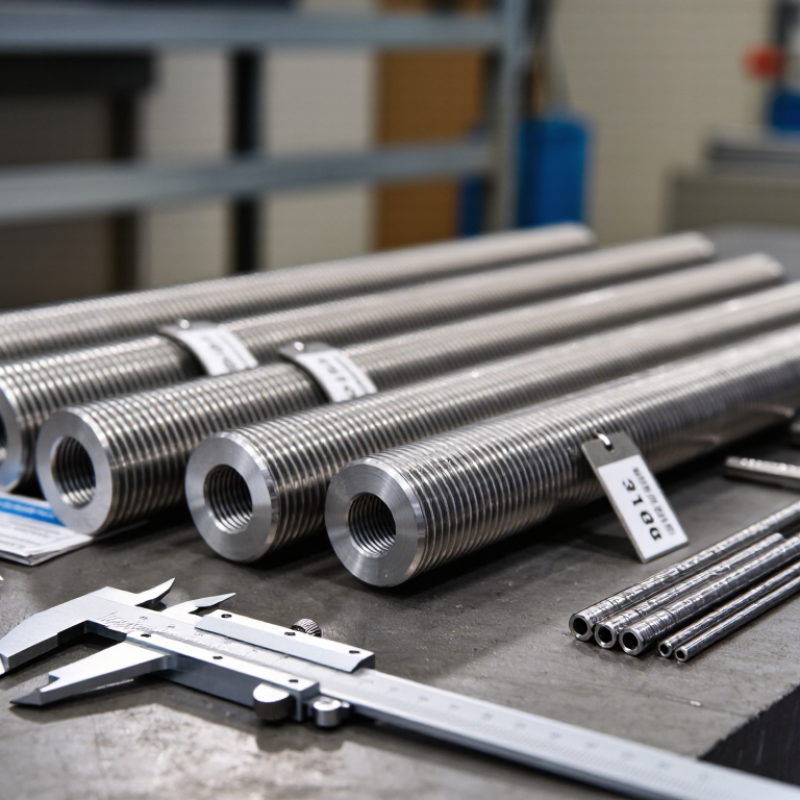
Stainless threaded rods are long, straight fasteners with continuous external threads along their length. They connect, suspend, or reinforce components when standard bolts are too short. In construction and equipment assembly, the rod passes through aligned holes, plates, or brackets. Nuts and washers then create a controlled clamping force. Simple in appearance. Critical in use.
Their structure includes a stainless steel body, a formed or rolled thread, and two accessible ends. Common thread profiles include metric and unified standards, depending on project requirements. Austenitic stainless grades offer strong corrosion resistance in humid, coastal, and food-processing environments. However, “stainless” does not mean unlimited protection. Chlorides, poor cleaning, and trapped moisture may still cause surface damage. Material selection needs evidence, not assumptions.
A dependable China-based supplier should verify diameter, pitch, length, straightness, and thread accuracy during production. Surface inspection also matters because burrs can prevent smooth nut engagement. In practical installation, I check the rod with a matching nut before assembly. This small step prevents costly delays. Tensile performance, chemical composition, and dimensional reports strengthen traceability. Some projects require passivation or specific finishes. That choice depends on exposure and contact conditions. A common mistake is selecting a larger diameter without checking thread compatibility. Strength alone does not solve a fitting problem. Good engineering leaves room for inspection, adjustment, and honest review.
Key Stainless Steel Grades Used for Threaded Rod Production
China Best Stainless Threaded Rod Supplier and Manufacturer
Key Stainless Steel Grades Used for Threaded Rod Production
Stainless steel grade selection affects strength, corrosion resistance, thread quality, and service life. Grade 304 remains a practical choice for indoor equipment, machinery frames, and general construction. Its balanced chromium and nickel content supports reliable corrosion resistance in ordinary environments. It also forms clean threads during cold heading and rolling.
Grade 316 performs better near saltwater, chemical vapors, and humid processing areas. Molybdenum improves resistance to chloride attack, although it does not make the rod immune to corrosion. Grade 316L contains less carbon than standard 316. This lower carbon level helps reduce sensitization after welding or high-temperature exposure. It suits assemblies requiring welded components.
Other grades serve more specific needs. Grade 303 offers easier machining, but its sulfur content can reduce corrosion resistance. Grade 410 provides higher hardness after heat treatment, yet it needs careful protection in wet conditions. For demanding strength requirements, precipitation-hardening grades may be considered, but their processing costs and heat-treatment controls are higher. No grade is perfect. A frequent mistake is choosing 316 only because the environment “looks harsh.” Chloride concentration, temperature, surface finish, and cleaning practices must be checked together. Thread dimensions also matter. Poor rolling pressure can damage the surface, even when the steel grade is appropriate.
Key Stainless Steel Grades Used for Threaded Rod Production
Chromium content is shown as the midpoint of the standard composition range for each grade. Grades 304 and 316 are widely selected for general corrosion resistance, while 321 and 310S are suitable for elevated-temperature applications. Grade 410 is a hardenable martensitic stainless steel with lower chromium content. Values are based on typical ASTM A240 chemical composition ranges; actual threaded rod specifications may vary by product standard and supplier.
How to Evaluate a China-Based Threaded Rod Supplier
China Best Stainless Threaded Rod Supplier and Manufacturer
How to Evaluate a China-Based Threaded Rod Supplier
China’s scale is meaningful, but scale alone proves little. World Stainless’s Stainless Steel in Figures 2024 reports 58.4 million metric tonnes of stainless crude steel in 2023. China contributed roughly 63 percent. That capacity can support stable sourcing. It can also hide inconsistent subcontracting. Ask for the manufacturer’s address, production flow, and monthly threaded rod capacity. Visit threading, inspection, and packing areas when possible. A polished sample is not enough.
Request heat numbers, chemical analysis, tensile results, and hardness data for each lot. Compare requirements with ISO 3506-1 or ASTM F593. Check thread dimensions using calibrated GO and NO-GO gauges. Confirm passivation records and surface condition. The ISO Survey of Management System Standard Certifications shows ISO 9001 remains widely adopted worldwide. Certification is only a starting signal. Review its scope and recent audit findings. I would reject vague certificates. They create avoidable risk.
Evaluate traceability from mill coil to carton label. One heat number should follow the material through cutting and threading. Independently verify diameter, pitch, length, straightness, and alloy grade. Ask for retained samples and corrective-action reports. Compare quoted lead time with the supplier’s last twelve shipments. Packaging should protect threads with sleeves or firm dividers. Consider a small pilot order. It may feel slower, yet it exposes weaknesses before a full contract. One caution remains: salt-spray results can mislead when application conditions are unclear. Require test duration and acceptance criteria in writing.